The Story
The Legend of the Jack
There was a table under the Plane Tree. Eight cards, a single coin, and a man who never seemed to age — everyone called him the Jack, because nobody knew his real name. Just as nobody could ever tell which of the four face-down cards he was hiding behind.
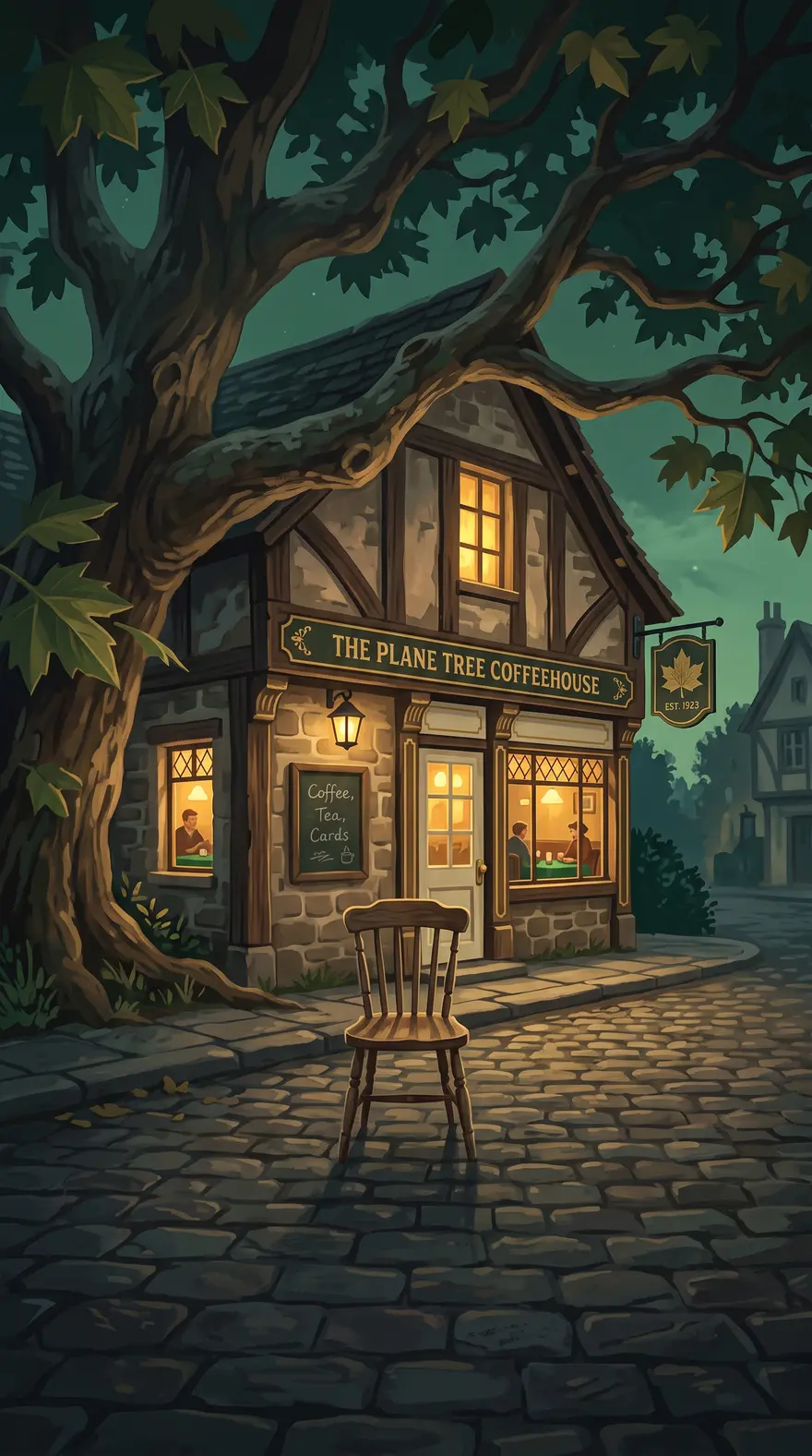
The coffeehouse under the Plane Tree
In the old quarter of town, beneath a plane tree older than anyone could remember, stood a single-story coffeehouse: Çınaraltı — "under the plane tree." The tables were green felt, the light always a little yellow, the tea always brewed a little too strong. People went there to spend the evening together — the loser bought the next round of tea, the winner laughed a little louder. That was all.
But Çınaraltı had a side nobody talked about. Once a month, maybe twice, when the fourth chair stood empty and exactly eight cards lay on the table, someone would walk in. Nobody ever saw him arrive; he was simply there.
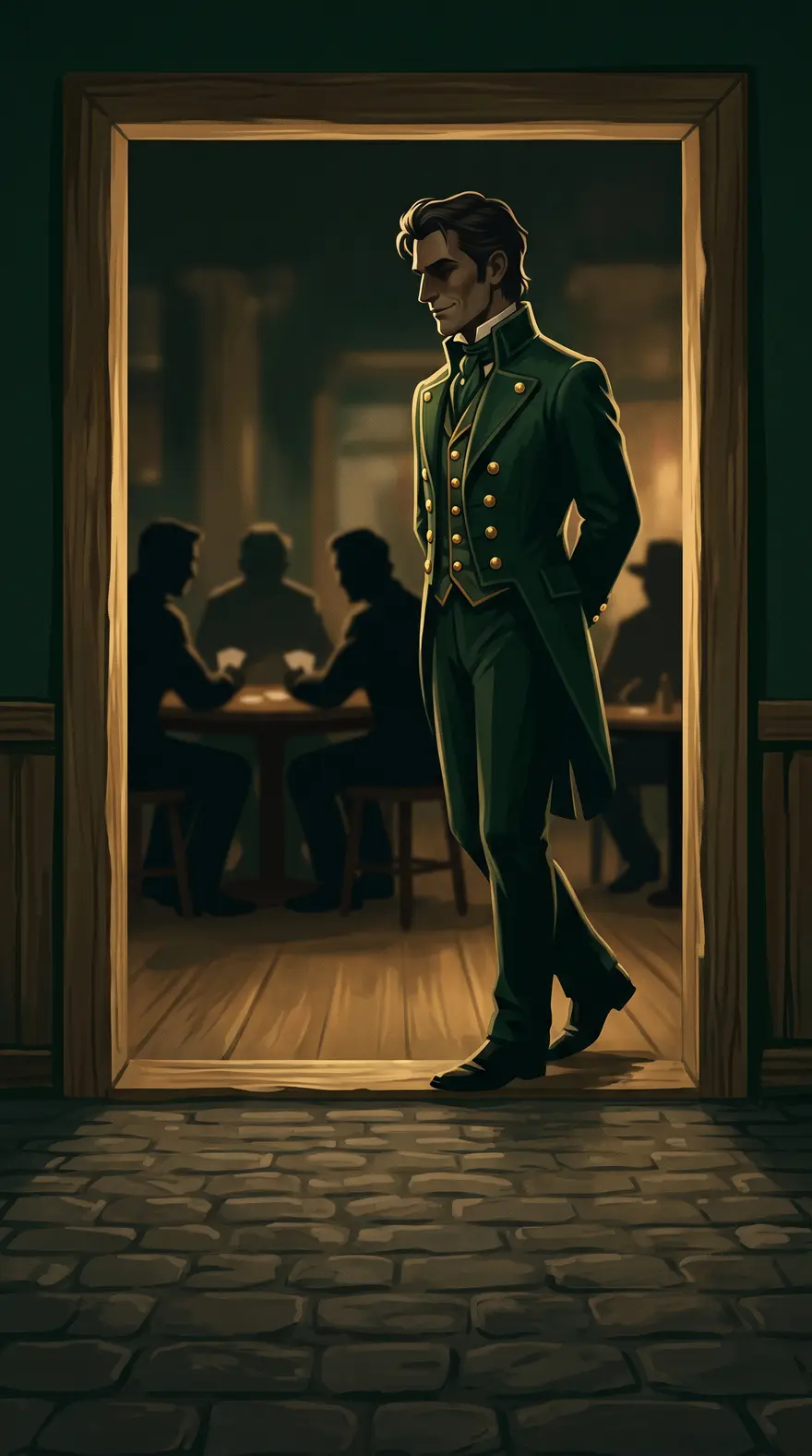
Who is the Jack?
His age was impossible to tell. His waistcoat was always the same, its buttons always brass. He never leaned back in his chair, and he never picked up his cards — because the only thing he ever really played was himself: hiding behind one of the four face-down cards.
He never came to rob anyone, never to shame anyone. All the Jack wanted was a good hand — a night worth retelling. Even when he lost he would smile and say, "Next time." When he won, he said nothing at all; he didn't need to — the table applauded for him.
They say nobody ever beat him. The truth is: very few ever found him.
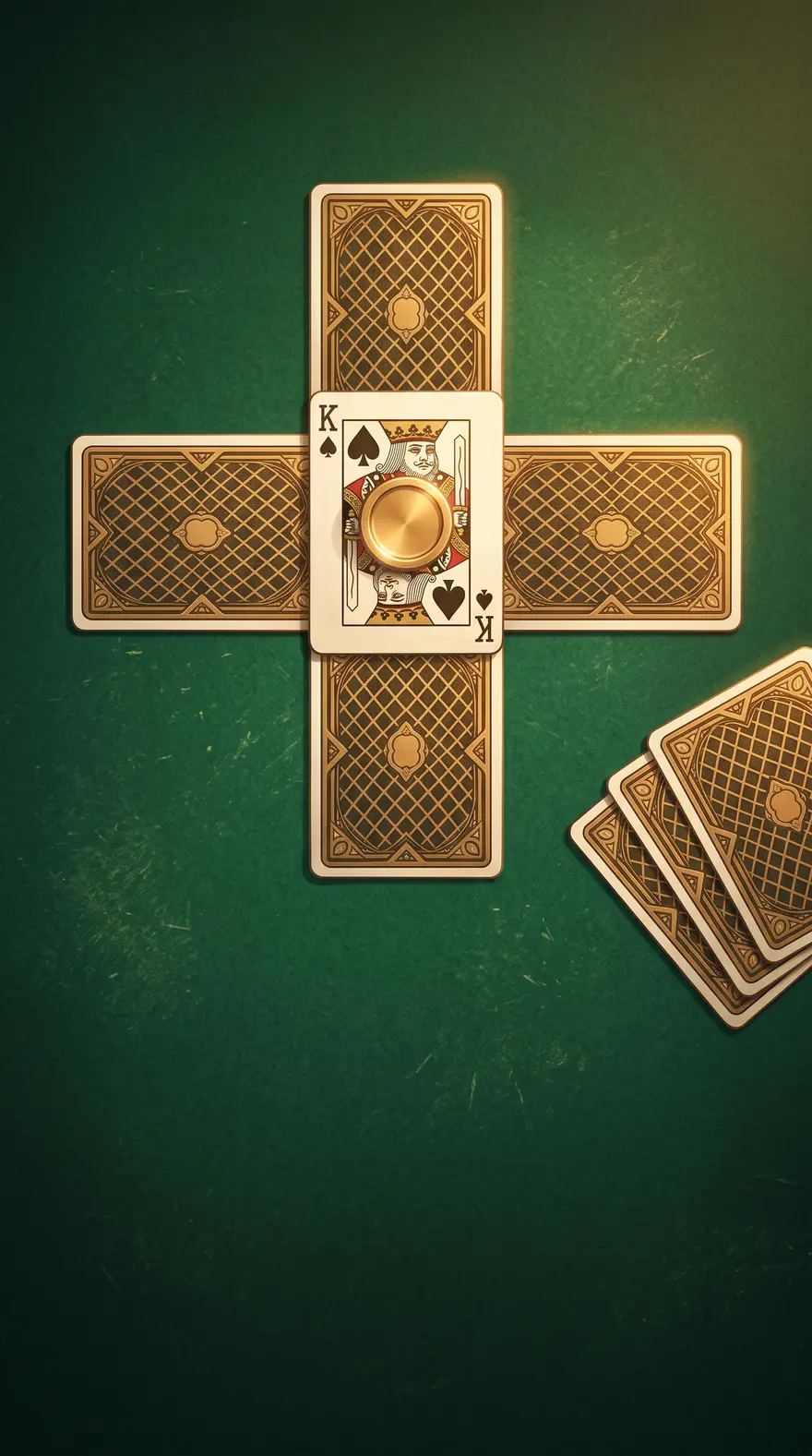
Eight cards, one secret
The story goes that on the night the Jack first appeared, there was a standard deck on the table — fifty-two cards, numbers and all. The Jack sat down, took the deck, and swept every number card aside. "We don't need these," he said. "Only four things ever matter at a table: who is king, who is boldest, who is most graceful — and who is hiding."
Eight cards remained: two Kings, two Aces, two Queens, two Jacks. After that night, no other deck was ever used at Çınaraltı. And the Jack hid himself among those eight cards — every time he sat down, he was behind two of the four face-down corners, and absent from the other two. He never told anyone which. He simply played.
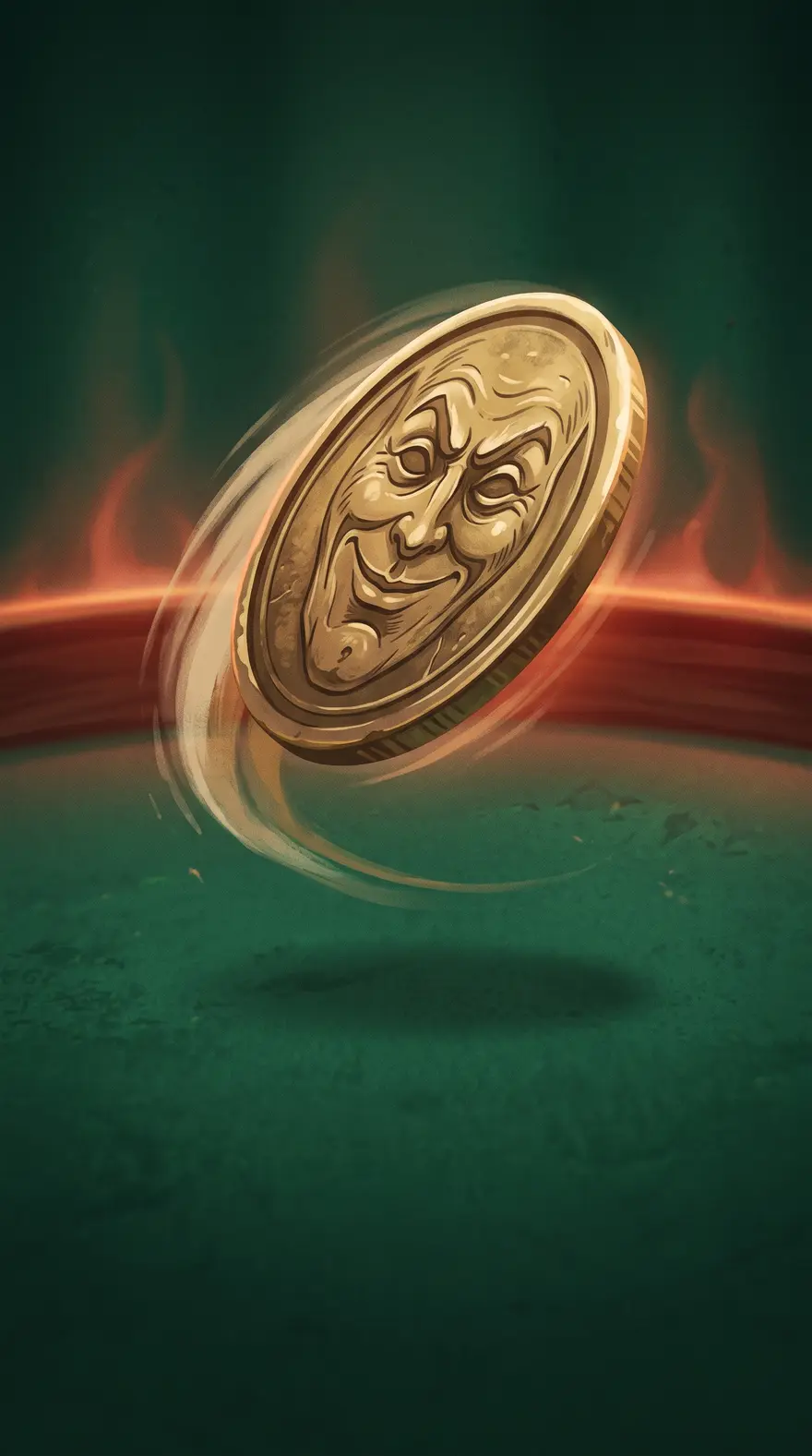
The pawn: the coin the Jack left behind
On that first night, the Jack took a brass coin from his pocket. One face was plain; the other bore a fine relief — a small face, easy to miss unless you looked closely. "Before you decide," he said, "flip this coin. If it lands plain, play what you know. If it lands on the face — come find me."
When he left, he left the coin on the table. Today, a copy of that same coin sits in front of everyone who takes a seat: the pawn. Which corner you place it on is a choice; which face looks up is a confession — "this hand I'm playing safe," or "this hand, I want the Jack."
Why 13?
An old saying still makes the rounds among Çınaraltı's regulars:
"At the Jack's table, 13 isn't unlucky. It's brave."
Elsewhere, thirteen is the number of bad luck. At Çınaraltı it is a threshold — proof of whether you showed enough nerve in a single night. The Jack never lets anyone leave the table early; until someone reaches 13, everyone sits, everyone tries something. The first to thirteen wins the night — but almost nobody gets there playing it safe. Sooner or later, you have to flip the coin.
The Jack's rule: safe twice, brave the third
The Jack imposed only one rule: you may play it safe two hands in a row, and nobody will judge you. But on the third hand he taps the table softly — it makes no sound, yet everyone understands — and that hand is no longer yours to keep safe. It is courage's turn. You must flip.
"Comfort never lasts," the Jack would say. "The table doesn't forgive it. Neither do I." In the game today it looks like a simple fairness rule — but it is in fact the oldest and hardest rule of Çınaraltı itself.
The night that wouldn't end
Once, Nazif Usta — Çınaraltı's owner, younger and hotter-blooded then — reached 13 in the very same hand as the Jack. The table fell silent. The Jack smiled: "Then the night isn't over," he said, and dealt a new hand.
That night, so the story goes, lasted until morning. Neither Nazif Usta nor the Jack gave an inch. As the sun rose, Nazif Usta edged one point ahead; the Jack stood, took off his hat, said "That's enough for tonight," and walked out the door. He didn't return that night.
That is why a tie at Çınaraltı is never settled by drawing lots. If there is a tie, a new hand is dealt among those who are level — and the table does not rise until the true winner is known.
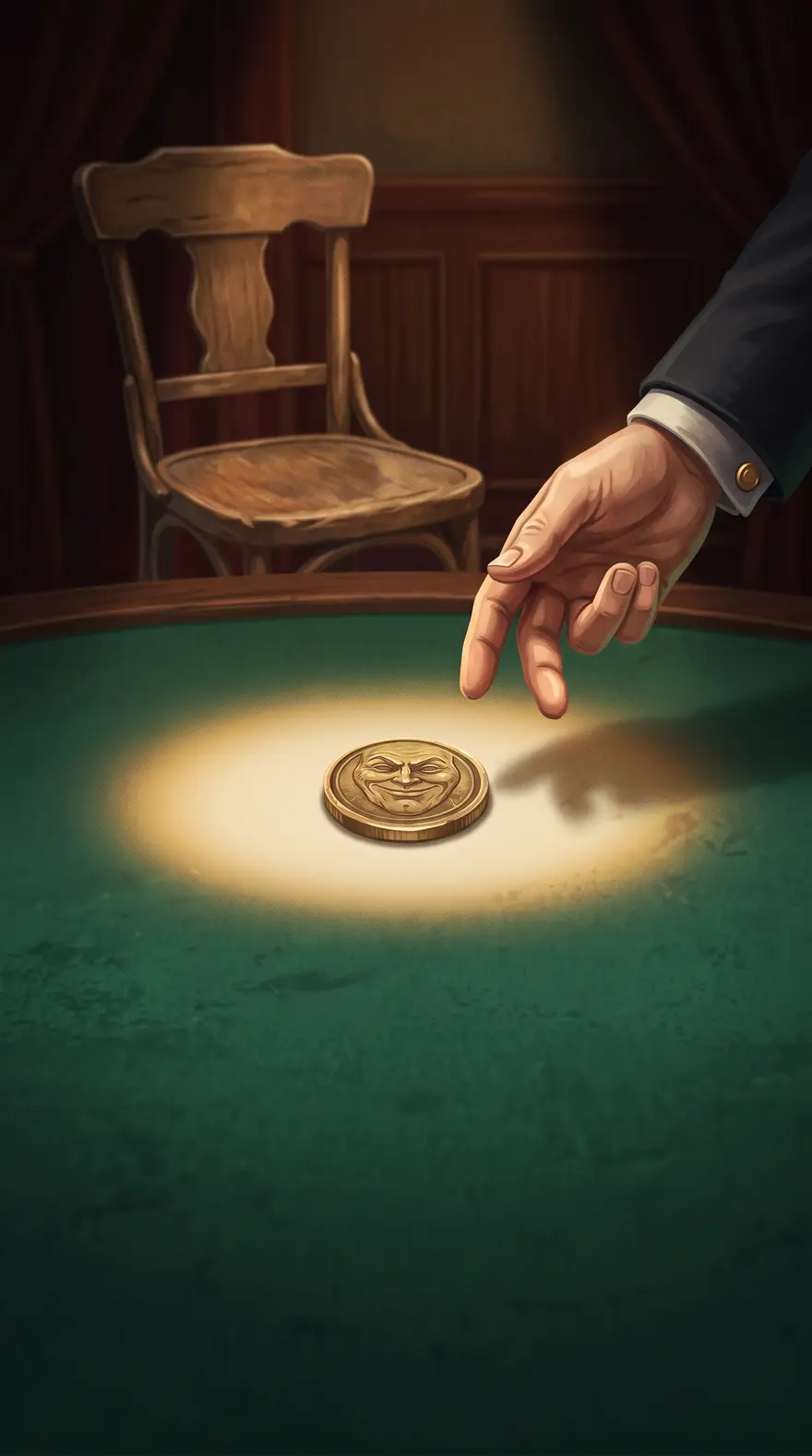
The next empty chair: you
You might be a regular who has come to Çınaraltı for years, or someone sitting down for the first time — the coin makes no distinction. Every evening a new "you" takes a seat at the table; the rest of the story is written by your hand.
Everything on the table has a story
| In the game | In the legend |
|---|---|
| 8 cards | The deck the Jack left that first night; he swept the rest away with him. |
| The open center card | The Jack's single clue for the hand — a glimpse of his face. |
| Four face-down corners | The four places the Jack could hide; he is behind two, absent from two. |
| The pawn (straight/reversed) | A copy of the Jack's coin; you declare your nerve with it. |
Everything on the table has a story (cont.)
| In the game | In the legend |
|---|---|
| The forced-hunt rule | The Jack's table rule: safe twice, and the third belongs to courage. |
| A Jack in the center (×2) | The moment the Jack shows his face — the hunt grows richer and riskier. |
| 13 points | The number that ends a night at the Jack's table; not unlucky — brave. |
| Tiebreaker hands | Nazif Usta's endless night: the table doesn't rise until the true winner is known. |
Last page
The night is still going
The table is set at Çınaraltı and the coin is where he left it. The rest is in your hands — nobody has written the end of this story yet.
Turn the page with the arrow keys, the buttons, or a swipe